
AfricaLics webinar & official launch of the Innovation and Sustainable Energy Transition in Africa (i-SET Africa) Research Coordination Area (RCA)

- This event has passed.
AfricaLics webinar & official launch of the Innovation and Sustainable Energy Transition in Africa (i-SET Africa) Research Coordination Area (RCA)
Webinar Topic: Energy Transition in Africa: Leveraging Critical Minerals for Local Value Addition
Background and Rationale
Africa is home to significant reserves of critical minerals such as lithium, cobalt, nickel, graphite, rare earth elements, and copper—minerals that are central to the global energy transition. As the world shifts toward cleaner energy technologies, demand for these resources is rising rapidly. However, the continent’s role in global energy value chains remains primarily extractive, with limited local beneficiation and value addition. This model risks perpetuating a cycle of external dependency, environmental degradation, and missed industrial development opportunities.
Amidst growing global interest in green technologies, Africa’s critical minerals present a strategic opportunity to catalyze inclusive, sustainable development and structural transformation. However, seizing this opportunity requires a fundamental rethinking of current policy frameworks, innovation ecosystems, investment strategies, and governance models to drive local value addition and foster homegrown technological capabilities.
This webinar marks the official launch of the Innovation and Sustainable Energy Transition in Africa (i-SET Africa) Research Coordination Area (RCA) under AfricaLics. As the inaugural event of the RCA, it will set the stage for collaborative research and dialogue on sustainable energy futures in Africa.
The session will explore how African countries can strategically harness their critical mineral resources to enable a just and inclusive energy transition, promote green industrialization, and strengthen their position within global clean technology value chains.
Webinar Objectives
- To highlight the role of critical minerals in enabling Africa’s energy transition.
- To examine the opportunities and challenges of local value addition and beneficiation in Africa’s critical minerals sector.
- To identify policy, innovation, and investment pathways for strengthening Africa’s position in global clean energy value chains.
- To promote dialogue among African researchers, policymakers, private sector actors, and development partners on strategies for a just and sustainable energy transition.
Key Discussion Themes
- The geopolitical economy of critical minerals and Africa’s role in the global energy transition.
- Barriers and enablers to local beneficiation and manufacturing of clean energy technologies in Africa.
- Innovation and industrial policy strategies for building local capacities in the critical minerals value chain.
- The role of regional cooperation and continental frameworks such as the AfCFTA, the African Green Minerals Strategy, and the African Union’s Agenda 2063.
- Case studies on successful local value addition and lessons for scaling.
Target Participants
- Policymakers and government agencies involved in mining, energy, and industrial development.
- Researchers and innovation scholars.
- Civil society organizations and advocacy groups.
- Development finance institutions and donors.
- Private sector stakeholders in mining and energy sectors.
- Students and early-career professionals in relevant fields.
Organisers
This webinar is organised under the Research Coordinating Area of the AfricaLics network by the research team on Innovation and Sustainable Energy Transition in Africa (i-SET Africa). The team leads the thematic area on sustainable energy transitions in Africa, with a focus on fostering cross-country learning, research collaboration, and policy engagement to drive inclusive innovation and green industrial development.
Research Coordinating Team on i-SET Africa
- Thematic Chair Lead Institution: National Centre for Technology Management (NACETEM), Nigeria
- Thematic Chair Lead Person: Dr. Maruf Sanni, Deputy Director, NACETEM
- Thematic Chair Partner: World Resources Institute (WRI) – Mbeo Ogeya, Senior Research Associate – Energy Transition
- Thematic Chair Partner: National Centre for Technology Management (NACETEM), Nigeria – Babatunde Adetunji Aodu, Assistant Chief Research Officer, NACETEM
Expected Outcomes
- Increased awareness of Africa’s critical role in the global energy transition.
- Clear articulation of policy and innovation gaps to be addressed for local value addition.
- Strengthened network of stakeholders committed to advancing Africa’s green industrial agenda.
- Actionable recommendations for national and regional actors.
Format and Structure of the Webinar
- Welcome Address & Opening Remarks
- Presentation
- Q&A Session
- Wrap-Up & Next Steps
Follow-up Activities
- Publication of a post-webinar policy brief and summary report.
- Follow-up webinars and research dissemination activities within the AfricaLics network.
About the Speaker
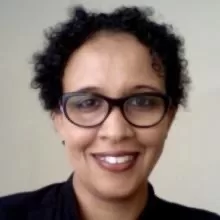 Dr. Meron Tesfamichael is the Director of the WRI Africa Energy Program, leading the Institute’s efforts in two key areas: energy access and clean energy transition. The energy access pillar seeks to identify sustainable, affordable and reliable energy solutions to communities that lack access or are facing challenges with inadequate or unreliable power supply. Simultaneously, under the clean energy transition pillar, support countries in identifying contextually appropriate transition pathways that are in harmony with climate commitments and development needs.
Prior to joining WRI, Meron held the position of Senior Research Fellow and Lecturer at University College London, where her work concentrated on the intersection of energy transition and sustainable development in sub-Saharan Africa. Meron has extensive background in leading and managing projects across Africa on a range of issues, including energy access and efficiency, electrification of cooking, energy governance, just transition, and climate-compatible policies. Under flagship energy programs, Meron has regularly collaborated with researchers, public institutions, and development partners to inform the debate on energy access and transition in Africa.
Meron holds a Ph.D. in politics and a master’s in liberal studies from the New School for Social Research in the USA and has authored numerous reports and academic papers. Meron is also an advocate for integrated and transdisciplinary perspectives on Africa’s energy challenge as essential for developing equitable, inclusive, and sustainable solutions.
Moderator’s bio for the AfricaLics Webinar
 Dr. Maruf Sanni is the Deputy Director of Research at the National Centre for Technology Management (NACETEM), an agency under Nigeria’s Federal Ministry of Innovation, Science and Technology. He holds a PhD in Public Policy from the University of KwaZulu-Natal, South Africa, with a specialization in environmental sustainability. His research focuses on the interface between technological change and sustainable development, particularly in areas such as low-carbon innovation pathways, climate-resilient development, and climate change policy.
Dr. Sanni has held research fellowships at leading international institutions, including the United Nations University Institute for Natural Resources in Africa (UNU-INRA) in Accra, Ghana, and the International Centre for Science and High Technology of the United Nations Industrial Development Organization (UNIDO) in Trieste, Italy. He is also a Marie Skłodowska-Curie Fellow at the European Institute on Economics and the Environment (EIEE), Milan, Italy, where his work examined eco-innovation and the role of external knowledge sourcing in developing countries.
In addition to his research roles, Dr. Sanni serves as Nigeria’s National Contact Point (NCP) for the Marie Skłodowska-Curie Actions (MSCA) under the Horizon Europe Programme. He is currently the Head of Technology Management Education and Training department at NACETEM, where he leads capacity-building initiatives in science, technology, and innovation (STI) management.
Mbeo Ogeya
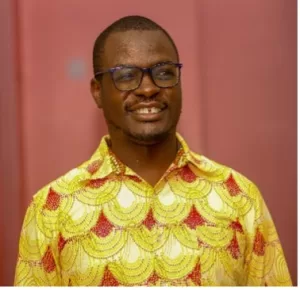 Mbeo Ogeya is a Senior Research Associate in the Energy Program at World Resources Institute (WRI). He is a seasoned energy systems modeller, has expertise in Africa’s energy transition, and systems of innovation. He uses both data analysis and research to help guide decision-making for partners and projects. Currently Mbeo is leading energy transition projects in Rwanda, DRC and Ethiopia. Before joining WRI, Mbeo worked with the Africa Energy Commission (AFREC) and the Stockholm Environment Institute (SEI), where he supported energy projects across Africa. His work has covered topics like energy efficiency, bioenergy, mini-grid development, and renewable energy planning in several African countries. He has over 15 years of experience in energy and climate change research, project management, and capacity building. He is a final year PhD candidate in Innovation Systems and Sustainable Development. Mbeo also holds a Master’s in Energy Management and a bachelor’s in industrial chemistry.
Babatunde A. Aodu
 Babatunde A. Aodu is a researcher at the National Centre for Technology Management (NACETEM). He recently concluded his PhD in Technology Management at the Obafemi Awolowo University (O. A. U.), Ile-Ife. His doctoral research focused on sustainable industrialisation in the SMEs sector through green innovation adoption. Babatunde has a M.Sc. (Technology Management) and B.Sc. (Chemistry) from O. A. U. and University of Ilorin, respectively. He has actively participated in national, bi-lateral and international research projects such as the IDRC, GDN, and NEPAD-ASTII projects, among others. He is actively contributing to research on STI policy, green innovation and green transition.
How to register
If you are interested in attending the webinar, please register via this link or get in touch with Yvonne Gitu at Y.Gitu@acts-net.org for more details.
After registering, you will receive a confirmation email from AfricaLics Zoom account containing information about joining the webinar. Please ensure you add the invitation to your calendar.